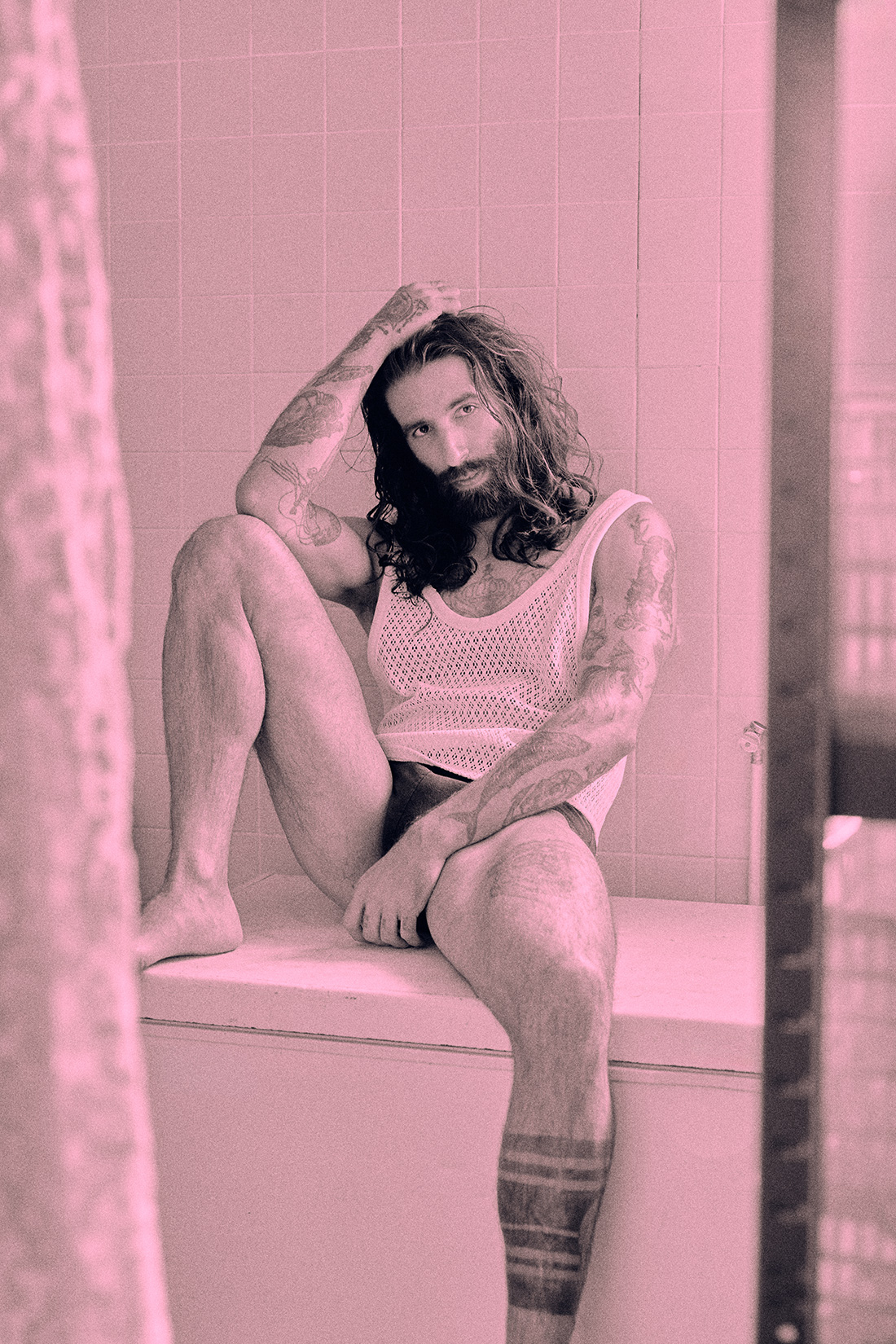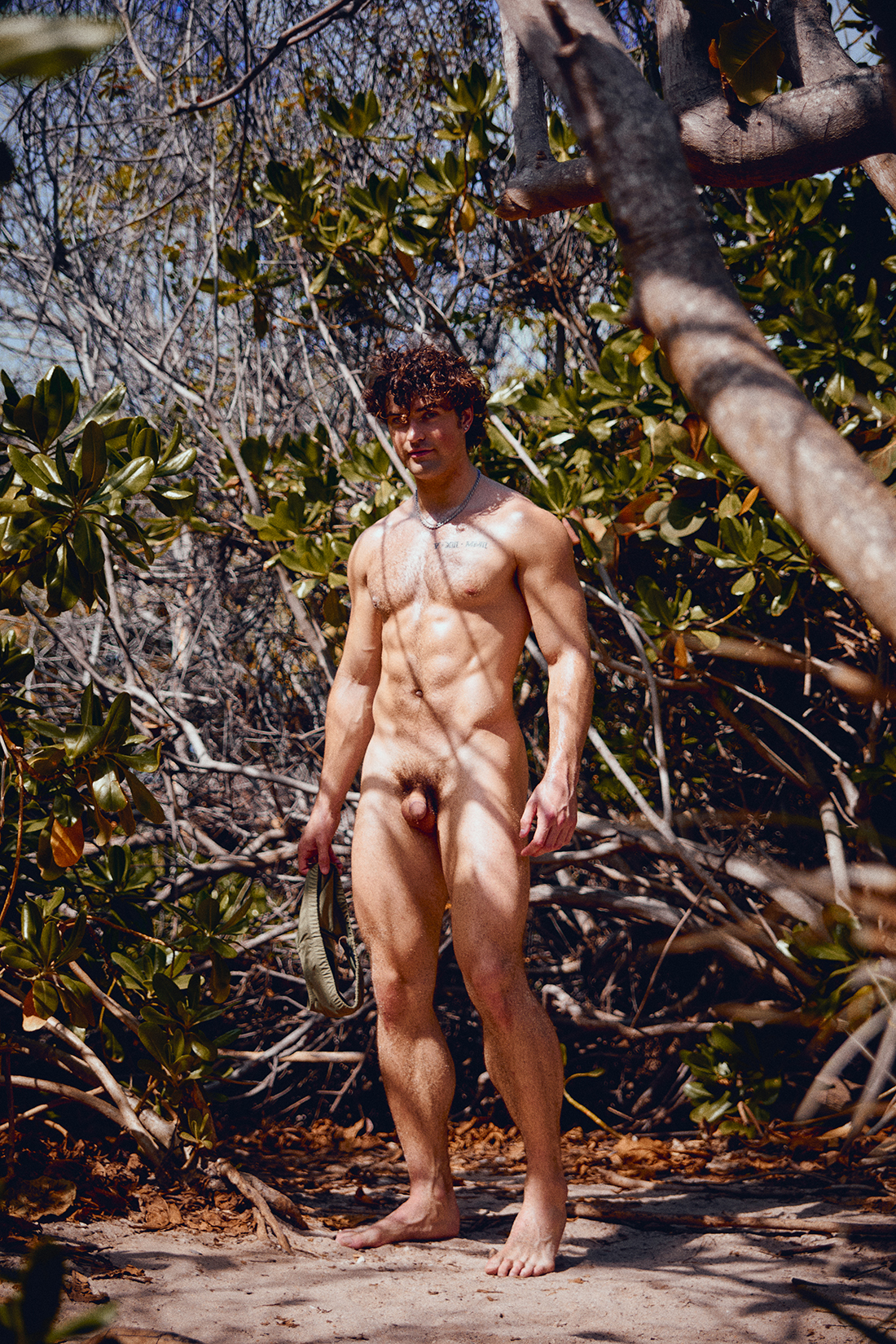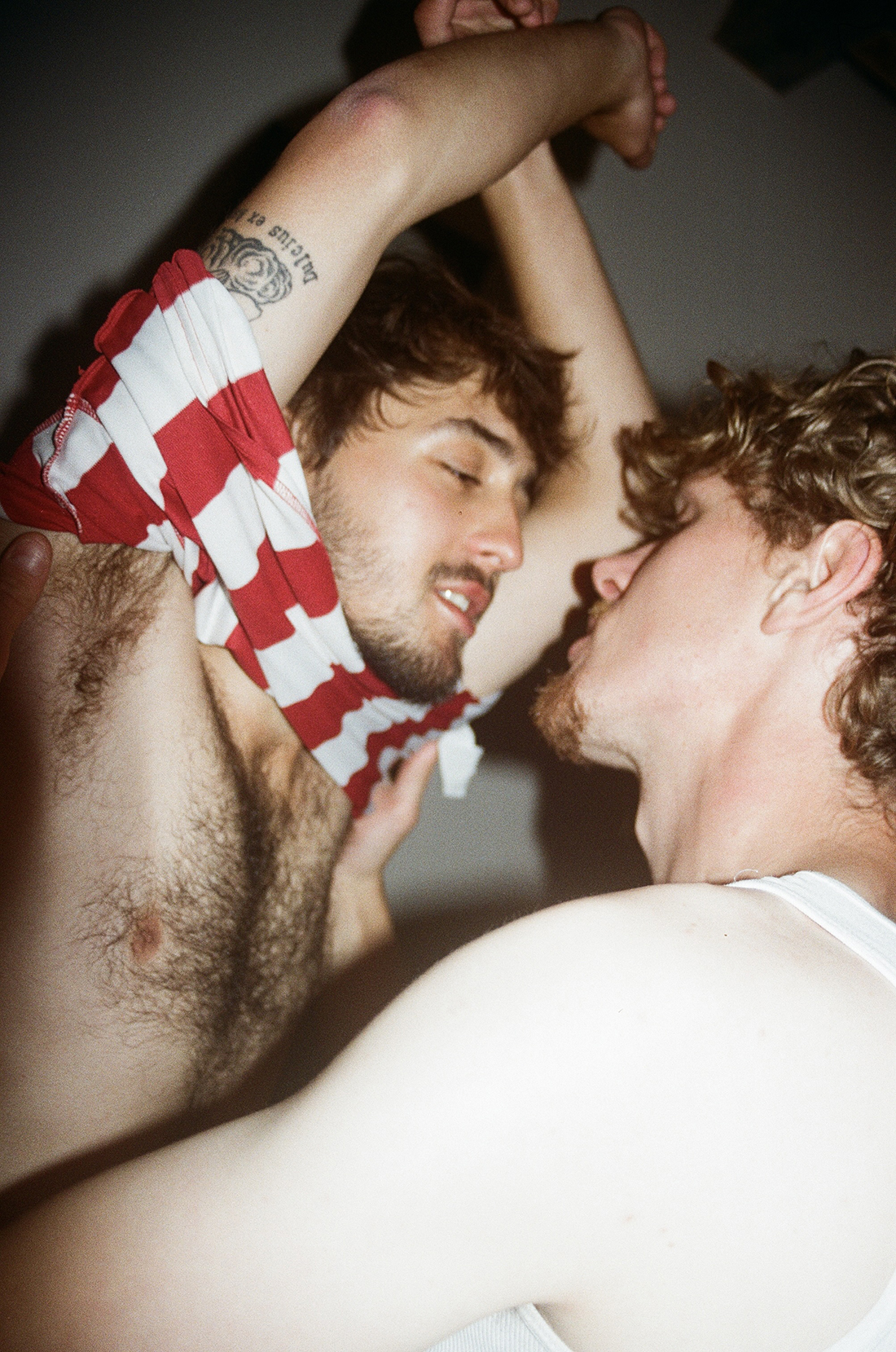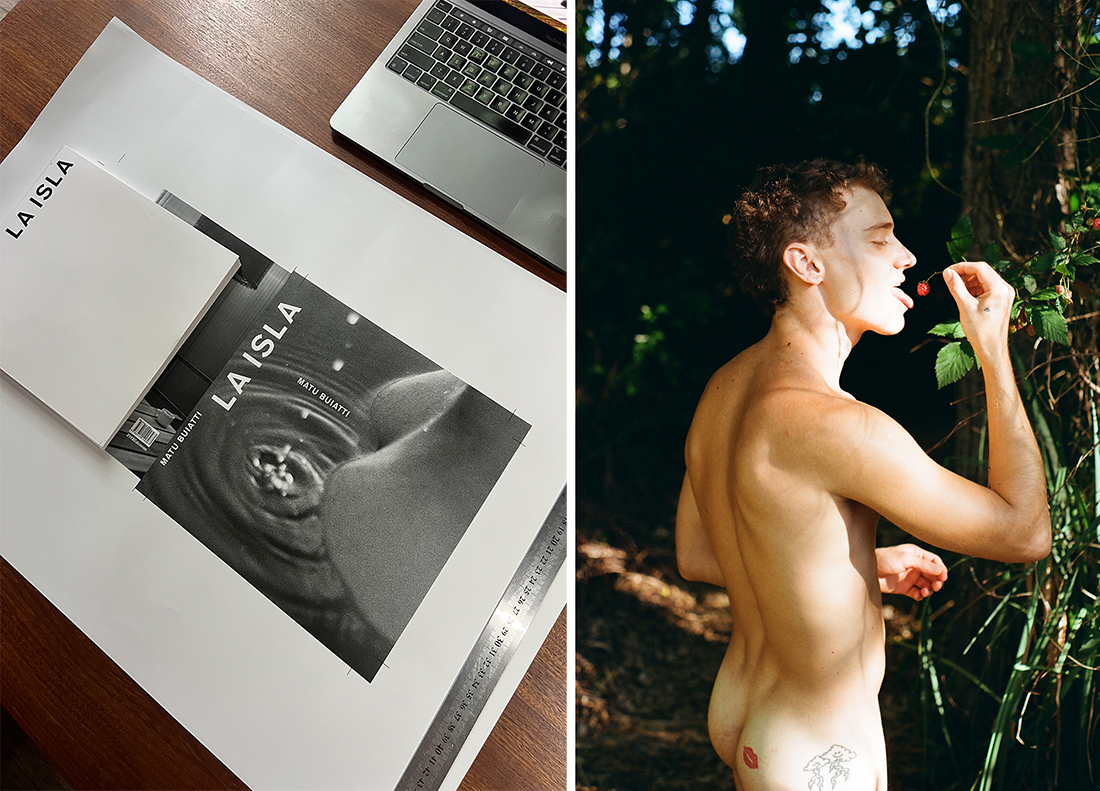
It’s always a joy to share news about someone’s book. Having gone through the process myself, I know just how much work, dedication, and energy it takes to bring a publication like this to life. The material we’re presenting today truly deserves to be celebrated. La Isla, by Argentine artist Matu Buiatti, is a book we’re proud to introduce. And remember: buying art is always better than buying a TV.”
20% DISCOUNT CODE FOR LA ISLA: PNPPLZINE
The code is valid until April 9th

Could we start with some background information about you? Where did you grow up, where are you currently based, and how did you get interested in photography?
I grew up and currently live in Buenos Aires, Argentina, although my work often takes me across different territories. From a very young age, I was connected to images: I received my first camera when I was seven years old and began by photographing my family and the landscapes from our travels. I was always drawn to rivers, mountains, and nature.
For many years, painting was my primary language, and photography appeared later as a natural extension of that search rather than a replacement. Today, both practices coexist, although La Isla marks a turning point in my relationship with photographic images.


What inspired you to create a book?
The book was born out of a need to pause and give form to a long process, both personal and artistic. La Isla was not initially conceived as a book, but as a necessity I had: to stop, to find myself, and to rebuild. This translated into encounters, conversations, and shared time. The camera began to appear as a non – essential tool in this journey.
Over time, I understood that this material required a structure that respected its rhythm and intimacy. The book emerged as the most honest format to hold that path without accelerating or fragmenting it.


How did you choose the models or series featured in the book?
There was no traditional selection process. All the people portrayed were strangers to me before we began. I was not looking for specific bodies, but for a willingness to encounter.
The only condition was emotional openness: the possibility of conversation and of building trust. In some cases, nudity appeared over time; in others, it did not – and both situations are part of the book. Participation is not defined by the visible or naked body, but by the bond that was created.
With time, twelve people – previously unknown to me – became part of La Isla and of my life.


How do your South American roots influence the visual language, symbols, and emotions present in this series?
I believe my gaze is deeply shaped by territory: rivers, vegetation, humidity, heat, cold, and free time. The body always appears in relation to that environment, to a climate and a rhythm that are not neutral. Added to this is Latin American idiosyncrasy – and particularly Argentine culture – which may be unique in the world: a kind of overfamiliarity with others, close physical contact between strangers, and the importance of conversation, mate, and pause. This way of relating generates a very particular openness and sensitivity.
La Isla could not exist without this relationship – without the trust, openness, and sensitivity that characterize Latin American culture, and Argentina in particular – nor without a non-productive sense of time, closer to experience than to results.


What challenges did you face while creating this project, either technically with analog processes or emotionally with the subject matter?
Technically, working with analog photography means accepting error, delay, and the impossibility of controlling everything. That was a challenge, but also a decision that defines the sensitivity of the process: analog film, limited shots, and a clear choice not to digitally edit any of the images. Each chapter of the book involved more time spent talking and sharing meals than taking photographs.
Emotionally, the greatest challenge was sustaining vulnerability – both my own and that of others. Working with strangers, with the body and intimacy, requires constant listening and a great deal of responsibility. It is not always easy, but it was essential not to force any process. Through listening, I understood that nudity was not what mattered most; communication was. Discovering the people who would inhabit my camera -naked or not- was what truly interested me.


What do you hope queer audiences -and non-queer audiences-will take away from this book?
I don’t expect either queer or non-queer audiences to take away a closed answer. What interests me is that both take away an experience.In a world that demands legible bodies, La Isla insists on bodies that have not yet been translated – bodies that exist before needing to define themselves, explain themselves, or take a clear position.For me, that pre-identity space is something anyone can share: a moment of intimacy and closeness where desire and fragility do not need to be justified. Above all, I want the book to generate questions rather than answers.


Can you speak about desire in your work – not only as sexuality, but as longing, memory, or political force?
Desire in La Isla is not limited to sexuality. It is present as impulse, as search, and as memory – a desire for encounter, for connection, for being seen without being reduced.
There is also a political dimension in slowing down, in refusing to produce fast -consumption images, and in allowing the body to appear only if it chooses to. For me, desire has to do with the possibility of choice.


Are there specific literary, cinematic, or artistic references that influenced the structure or mood of the book?
More than direct references, there are influences. My own experience with painting influenced how I think about sequencing, communication between images, and the relationship between body and emotion.
I also cannot avoid mentioning two people who were deeply influential and became involved in this book. Carlos Herrera, one of the great contemporary Argentine artists, who – almost without knowing me – told me: “You’ve been painting the same series for fifteen years. You need to change.” I needed to change, not only my painting but something deeper within myself. He encouraged me to leave the brush behind and use the camera as a new tool of expression. What we see now emerged from that influence.
And Slava Mogutin, whose immense generosity meant a great deal to me. Without knowing me personally – but knowing his story, his struggle, and his work – I wrote to him and shared my project. He agreed to write the back – cover text, synthesizing eighteen months of work into a single paragraph. That experience reaffirmed for me the value of support between people, regardless of how unfamiliar they may initially be.In that sense, the book is more about influences than concrete references.
When, where, and how can the book be purchased?
La Isla is available worldwide starting today through my website:
www.matubuiatti.com/laisla
The book was conceived as a carefully crafted object, produced on an intimate scale, in line with the spirit of the project. It is a 124-page hardcover book with a very high level of print quality. I am deeply moved by the final result and grateful to everyone who was part of the process.


So… what are the guys saying?
Valentín Garbi
Your chapter was the one that lasted the longest. From the first session to the last, twelve months passed – how was that journey for you?
After twelve months, you decided to face the camera naked. What was that experience like?
My journey as a model began in a beautiful and unexpected way. It started with Matías and his very particular art – something completely new to me. There I didn’t just meet a photographer, but a friend; because he is, above all, an artist, not simply someone behind a camera.After our first encounter on La Isla, a bond and a friendship were born, crossed by a chemistry so genuine that, over time, we found ways to see each other throughout the year just to talk, drink wine, and take photos – almost like a sacred excuse.
I had never dared to do nude work, for an intimate reason: how my body would look, without clothes, through the lens. I knew that moment would eventually arrive. And the trust I have in Matu is so great that, at the end of 2025, while commemorating our first year of friendship, my first nude session took place. As I had sensed, it wasn’t such a big deal. It was simply about letting go, understanding that we were making art and, once again, writing history through a lens.

Samuel
Your chapter is the final one, with a strong emotional weight, but it lasted only one day. How did you experience that day, not knowing Matu beforehand? You were determined to face the camera naked – did you prepare yourself mentally, or did you let things unfold?
It was something we talked about for a long time before doing it, which gave me plenty of time to think about the shoot and the decision to do a nude for the first time. I questioned myself many times – why I would do a nude – but I decided to step out of my comfort zone and do it.
Today, I feel not only like a more complete model, but that the experience also gave me a much greater gift, one I hadn’t expected to receive: the feeling of having truly connected with nature for the first time in my life, and the breaking of taboos and inherited thoughts that, in the end, had always been limiting. I’m happy I did it, and that day I simply let myself be carried by the experience and by Matu’s talent.

Sebas
Knowing that this was your first nude in front of a camera, how did you feel before and after doing it? How much do you think the conversation beforehand influenced how comfortable the session felt?
Doing nude photos seemed interesting to me, a new experience. Before doing it, I felt quite confident, calm, and secure in myself. It wasn’t difficult to go through; rather, it was an experience that reaffirmed that personal confidence.When I made the decision to do the photographs, two phrases crossed my mind: “we are born naked and we will die naked,” and “we are here to experience – if not, what are we here for?” That helped me let go.
After taking the photographs, I felt just as calm, as if it were something completely normal. I didn’t feel shame, uneasiness, or discomfort. Everyone experiences it differently, and I’m grateful to be someone who could approach it naturally.
As for the prior conversation helping the session feel more comfortable, I believe it is very important. It was a reassuring conversation that allowed me to understand that the photographer is responsible for the emotions of the person being photographed. I felt that Matu understood that working with someone else’s body is not a game, and that it actually involves a great deal of responsibility.


The images featured in the post also appear in the book.
LA ISLA – BY MATU BUIATTI AVAILABLE NOW
Photographys by Matu Buiatti @matubuiatti
Boys: @augustososa__ / @maxdiazez / @valen_garbi / @_.joacotss._ / @dossantos._sebastian / @digons__ / @tiagoo.alvarez / @valendomecqq / @sun_vlad_shine / @laustelzer / @cizko.88

Be the first to see and hear about discounts, extras and updates! Sign up for Pineapple’s newletter here: