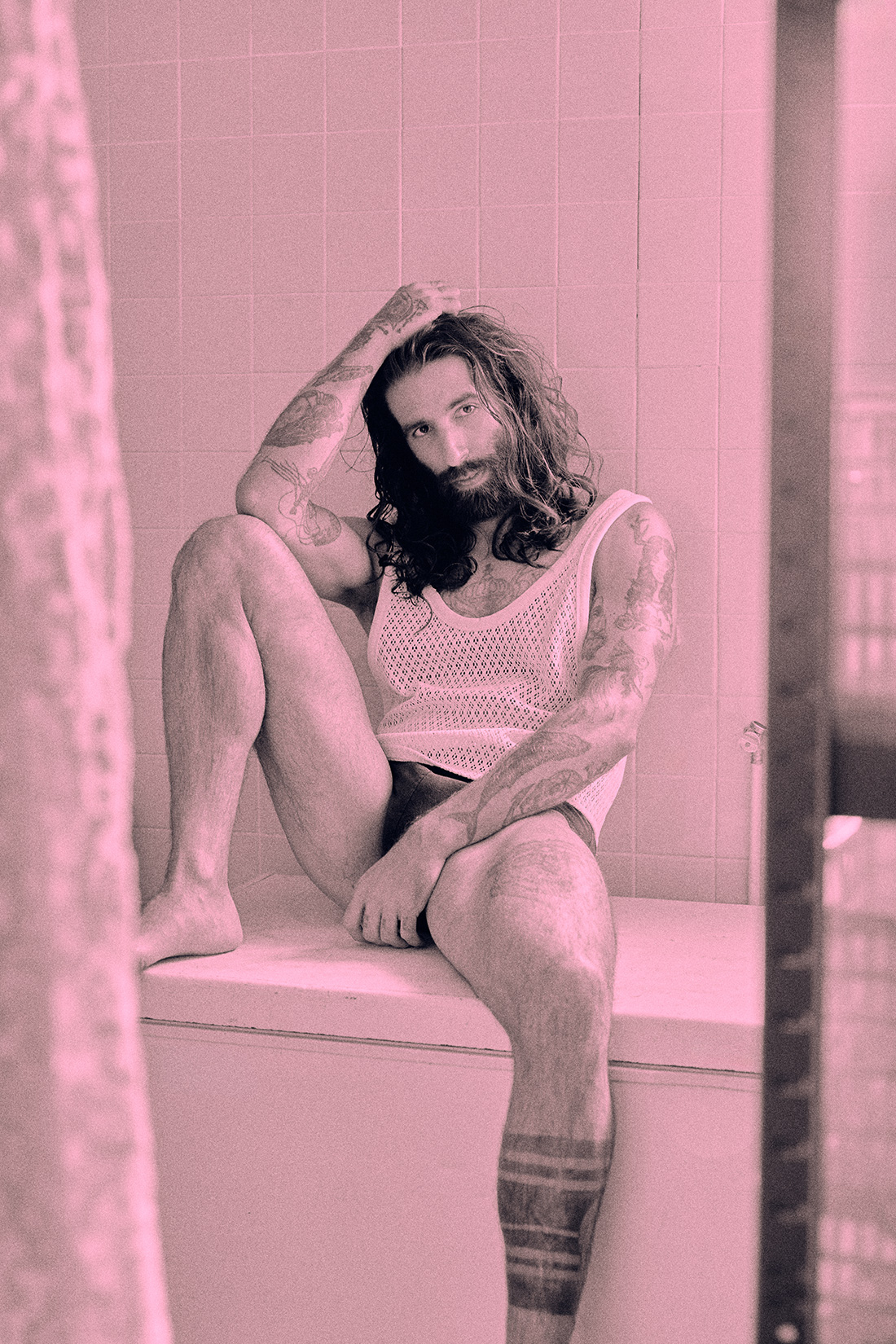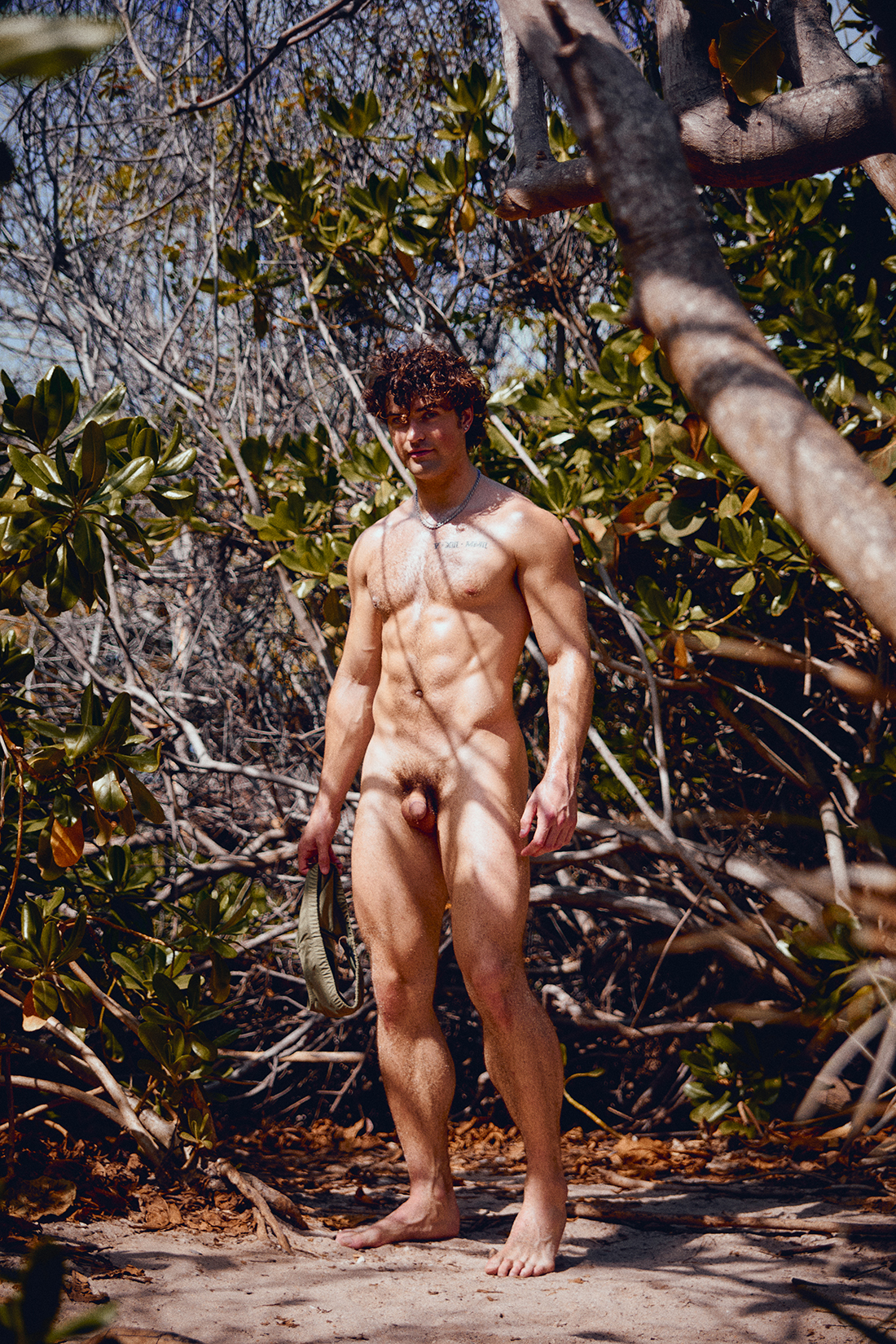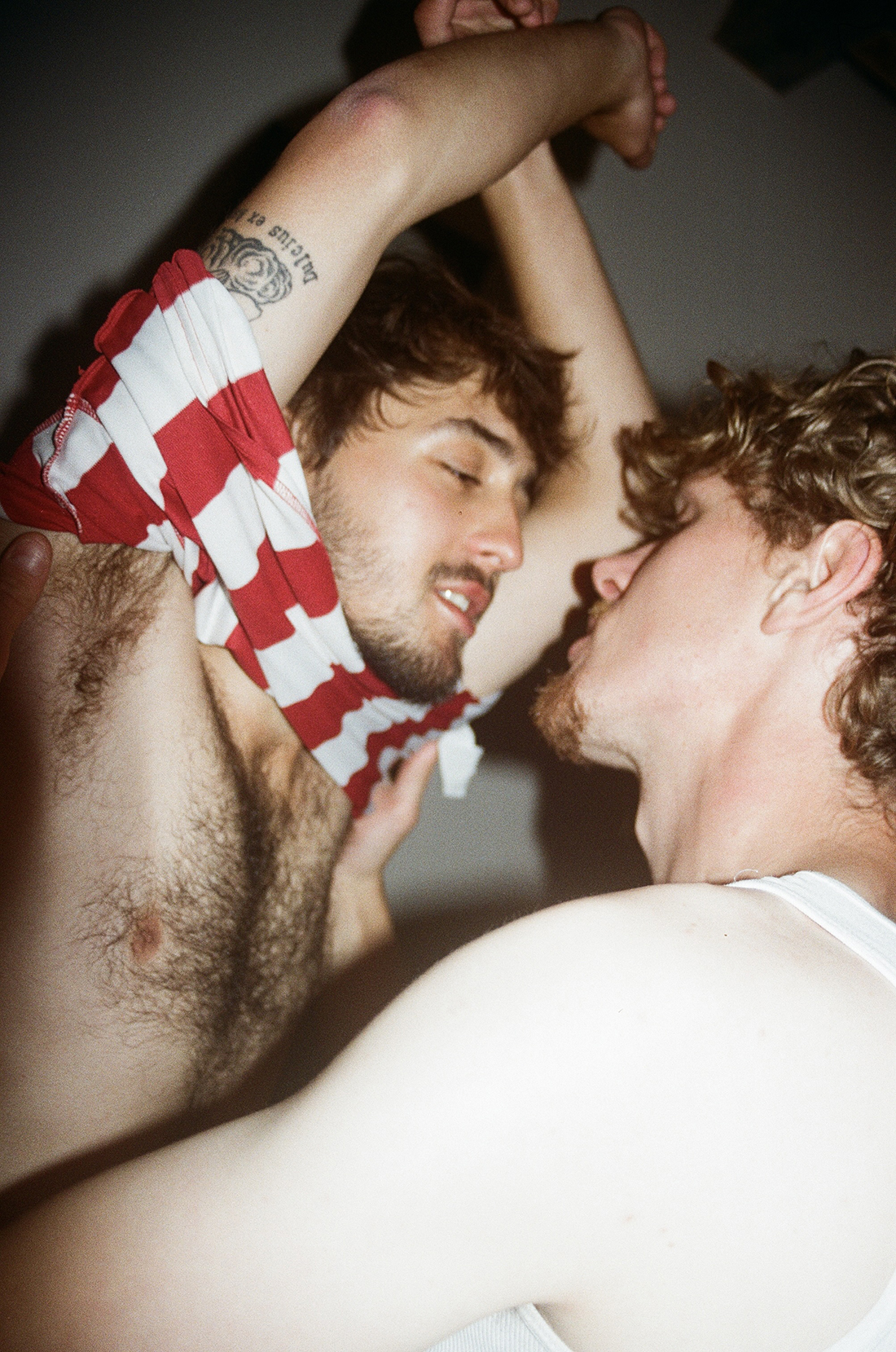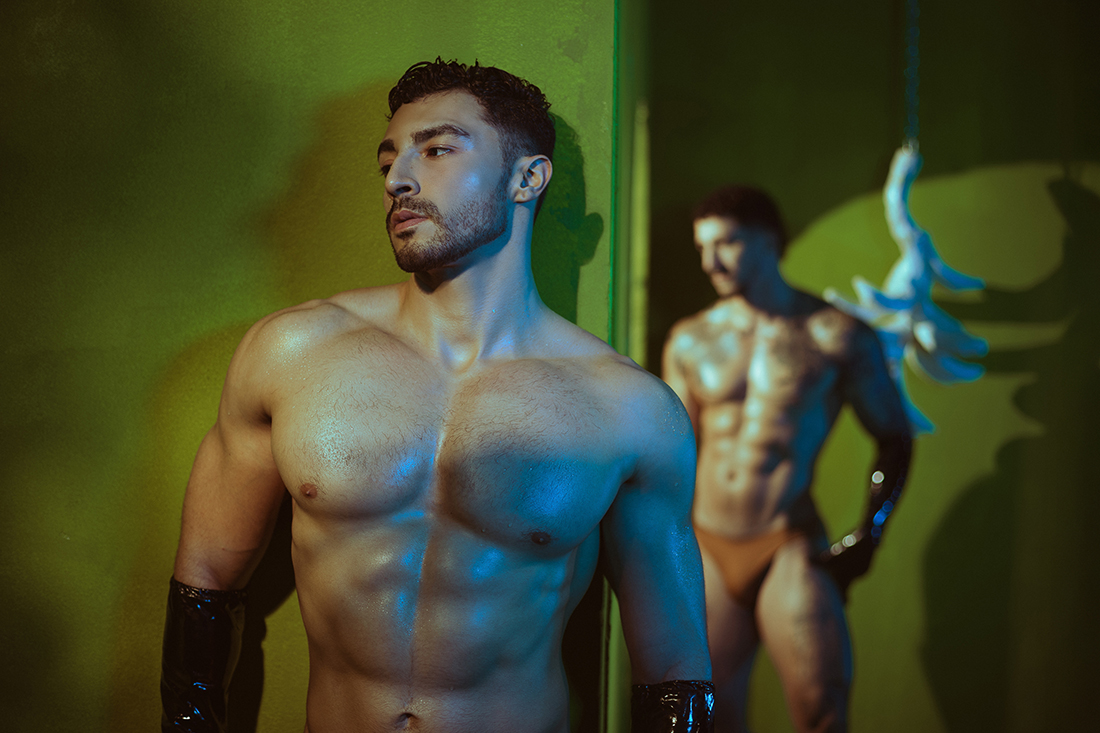
Josh Anton is a photographer driven by energy, movement, and visual drama. Drawn to bold light, color, and composition, his work captures people not as static subjects but as living, expressive forces. Deeply influenced by his early years photographing drag queens and performers, Anton’s visual language was shaped by their fearless self-expression and transformative presence – an experience that marked the beginning of his creative journey and continues to define his distinctive style today.

Could we start with some background information about you? Who are you, where you grow up, where you based, how did you get interested in arts?
I was raised in Lajas, a town in the southern part of Puerto Rico. For most of my life, I lived in a residential area, very much like the suburbs. In these kinds of spaces, where the houses are very cookie-cutter, I didn’t find much inspiration in my surroundings. So I took refuge in books, TV, and over time, in music and music videos. It was through magazines and music videos that I discovered the photographic work of people like Steven Meisel, Steven Klein, Annie Leibovitz, Nick Knight, and David LaChapelle, to name a few.
When it was time to decide what I was going to study at college, it was obvious to me that these were the people whose footsteps I wanted to follow. I began my degree in Visual Arts with a specialization in Photography.
As often happens when you arrive in a new place and find people who share the same interests and inspirations, you begin to feel like part of a community. In my case, it was a community of queer, trans people and drag performers. When I finished my bachelor’s degree, I knew I needed to be where everything was happening at the time, and that place was San Juan, Puerto Rico—the capital. So I moved to San Juan, Puerto Rico, and quickly found myself taking pictures of artists, designers, and models, but most of all performers and drag artists from the LGBTQIA+ community.


How do you remember your first experience with photography?
I like to photograph people in a way that makes them look alive and full of energy. I’m drawn to drama, which is why there is a constant element in my work related to movement, light, color, and composition. This dramatic quality was inspired by my early subjects, who were most often drag queens and performers.
Everything I absorbed from them—their looks, their energy, their stories, and the way they bring the show onto their skin and do whatever it takes to become a piece of art—deeply inspired me. That period marked the beginning of my creative journey and laid the foundation of my visual style as a photographer.


Not only the models, but also the accessories, the lighting, and the colors are very prominent in your photos. How did you discover this unique world that your photos represent?
As a queer kid, I always felt like I didn’t quite fit in. I remember how much I loved to run and dance—to feel my body moving fast, propelled forward. I once had a pair of small rollerblades that my dad bought for me. One day, while I was using them and playing in the street with my dad, a neighbor passed by and shouted, “Watch out, he’s going to be gay!” My dad ignored him. At the time, I didn’t know what the neighbor meant, but those rollerblades gave me the same sense of movement and freedom that photography would later give me.
So when I started going to drag shows and consuming more and more music videos through the early days of YouTube, I wanted to bring all that drama into my creative process. Those inspirations were the complete opposite of the cookie-cutter suburban space where I grew up.
Most of my personal creative photo sessions are experimental. I’m not a photographer who is overly technical or rigidly structured. I don’t work strictly “by the book.” When I’m in front of a subject, we are all free. I move around, throw myself on the floor, adjust the lights; they change their wardrobe. It’s essentially a performance, we create together.
Then I look at the results. It’s crazy, how many pictures I can take in a short amount of time. Sometimes is four or five thousand images—and I enjoy the process of reviewing them and learning from them all. I see what I could have done better, what I should change, or what I want to incorporate into the next photoshoot. By experimenting and allowing myself to make mistakes, I feel like I’m creating from my subconscious. Too much structure in the creative process makes me anxious.


Never mind the great photos, but you’re also extremely handsome. Which photographer would make you want to try modeling?
Oh, you’ve got me blushing over here…You know, I think there’s something incredibly beautiful about the way a person stands in front of a photographer as their portrait is being taken. I often wonder what questions are being answered in that moment. What are they feeling? Because you can’t look without feeling—there’s always an emotion involved. As a photographer, you sense it when you decide: this is the right angle, this is the precise moment.
All the factors that lead someone to decide that this is the still moment they want to preserve fascinate me. I want those photographers to answer those questions and, with me as the subject, discover what they draw out of me. But I am a shy person. And it’s funny, because I’m a photographer but basically no one has taken a professional portrait of me. Let’s put it this way: I’m very much a control freak when it comes to my own image. Most of the time, if someone is photographing me with their phone, I try to control everything—the position, the angle, the camera, the light—everything.


Good photos need a little magic or chemistry. Do you have any tricks you use to help the model get in the mood for the shoot?
Once I was photographing a client, and I noticed they kept looking at the preview on my camera in disbelief, constantly comparing the image on my camera to a photo of themselves on their phone. I tried to explain that a phone and a professional camera are different, and the image was never going to look the same because of that. I started my career as a photographer in the early stages of social media platforms, and that experience taught me that people have an agreement about how they look—and nowadays, more than ever, that agreement is achieved through many mediums, like social media, self-photo editing, filters, and so on.
When someone has their picture taken, they are essentially giving control of their likeness to another person, and in that sense, reliving that agreement. Combined with being in front of lighting setups, choosing styling, posing, and so on, it can be very stressful.
With that in mind, before a session starts, I try to establish a connection with the person—selecting music they like or chatting about their wardrobe choices, for example. I also like to ask how they want to look in the pictures, the level of editing they expect, which side of their face they prefer, and how they feel about certain poses. This process helps people feel more comfortable letting someone else capture their likeness because it makes them feel more integrated into the process—and it always works.
To me, the best sessions are always the ones where the person has at least some idea of what they want. That’s the first step in the right direction because it leaves space for the shoot to feel more like a conversation. But when someone doesn’t know what they want, every decision is questioned, and those sessions often become the more challenging.


You also work with many adult film models. Do you encounter prejudice in connection with this type of work?
Of course, anyone who works with adult film performers or with people who belong to communities classified as “other” by the political establishment or those in power, knows this reality well. It is not only prejudice; it is also censorship and, nowadays, even the shadow suppression of one’s work on social media platforms—or outright deletion. Power is legitimized by perpetuating inequity, and it works hard to keep stereotypes and prejudice alive for society to consume, reproduce and share.
There are consequences that come with working with anything considered different from what some people believe represents conservative values. You see those consequences in the form of prejudice directed at you and your photographic subjects—sometimes even from your own family, peers, clients, or community. For example, if you tell your family, “Hey, I work with adult film entertainers,” they will practically faint, because those words carry a burden of prejudice that most people never stop to question.
When I was approached to work with adult film entertainers, I questioned my own set of prejudices. I told myself, “This is what I was taught, this is what I heard, this is what I learned—but I will see it for myself.” People need to look beyond labels and understand that all humans are entitled to rights and are vulnerable to harm, regardless of what they do for a living. It has everything to do with who they are, not what they are.
To this day, I have only met great people—people with fears and hopes, goals and values, and professionalism—just like you and me. They simply happen to work in the adult film industry. The adult film industry exists because people consume it. Very often, the same people who point fingers in public are the ones consuming it behind closed doors, while daring to demonize it openly. That hypocrisy becomes even more dangerous when those people hold positions of power and allow stereotypes and prejudice to take the form of laws and public policy.
There is a possibility that some people and companies have chosen not to work with me because of the diversity of my subjects. Similarly, there are photographers who, due to their associations with brands, certain clients, or mainstream media—even those who belong to the community themselves—choose not to portray diversity in their subjects so they can continue catering to a mainstream audience. That is why I am proud to do my best to question my own beliefs and to stop perpetuating stereotypes through my work.


What is your ultimate goal in photography?
I want my future work to be more introspective and more representative of the stories I have had the privilege of learning through the lived experiences of my photography subjects. I believe that, in the process of trying to emulate my early interpretations of the photographers I admired, my understanding of their work became more informed. I returned to their work and began to understand the importance of, for example, how David LaChapelle represents his subjects—the stories behind their careers, his visual and historical references, and how significant his photography has been for the visibility of the LGBTQIA+ community. Much of his work was created using real props and real sets—things that were tangible and palpable. Especially now, in an era saturated with AI, this approach feels particularly important to me.
In that sense, there has been a shift in my goals as a photographer. Today, my goals are more focused on using my talent as a vehicle for my beliefs rather than on being known primarily for my style or my work with brands. Of course, I still aim to refine my technical skills in lighting and video, and perhaps to make another film or collaborate with artists I admire. However, those goals feel smaller when compared to the responsibility I feel toward my community at this particular moment in time. Every day I wake up knowing that I can do more to highlight the importance of equity and diversity. This is crucial to me, in part because no one truly knows whether, in the near future, visual representations of the LGBTQIA+ community might become illegal in my country, as they already are in many others. We cannot take anything for granted, and photography is a powerful medium.
Most of what we see in photography and video has already been done—either inspired by something else or directly referencing or remaking previous work. But the stories of individuals—their hopes and fears, and our shared lived experiences—are, to me, the most unique and original source of inspiration.


What do you do when you got time for yourself?
In my free time, I like to run—as far away from the camera as possible—just kidding! But yes, I enjoy running, going to the gym, and visiting the botanical garden close to my home because I love nature and chickens. I’m always listening to music or a good true-crime podcast. I also love watching music videos, both contemporary and from the “olden days,” like the ’80s and ’90s—especially the pop divas. That really inspires me and gives me a boost of energy and spark.
I love playing with my cats and I invented my own way of talking as if I were them. I also eat more cottage cheese than I probably should, which is why I insist on exercising. When I was younger, I was a party monster and a social butterfly—I was everywhere. Nowadays, I prefer calmness over chaos.


What makes you happy?
I can confidently say that chickens bring me joy. Whenever I see a chicken in real life or in a video, it brings a smile to my face. And if the a chicken has chicks is pure perfection!
Also Lady Gaga makes very happy, Whenever I’m feeling down, I look for anything Lady Gaga–related, she always lifts my spirtit up. I also love drag queens—I’m a total dragaholic!


Is there anything I haven’t asked but you want to tell me?
I feel like I’ve talked too much already, but I just remembered that my hometown, Lajas, is renowned for producing the best PINEAPPLES. Isn’t that a funny coincidence?
Please finish the sentences:
Currently obsessed for… Lola young and Villano Antillano’s music and Mayhem, of course.
My type of underwear is… Boxer briefs
My motto to live by… “You’re perfect, you’re beautiful, you look like Linda Evangelista” – Aja RDR S9


Photographs by Josh Anton @joshanton / x.com/JoshAntonPhoto


Be the first to see and hear about discounts, extras and updates! Sign up for Pineapple’s newletter here: